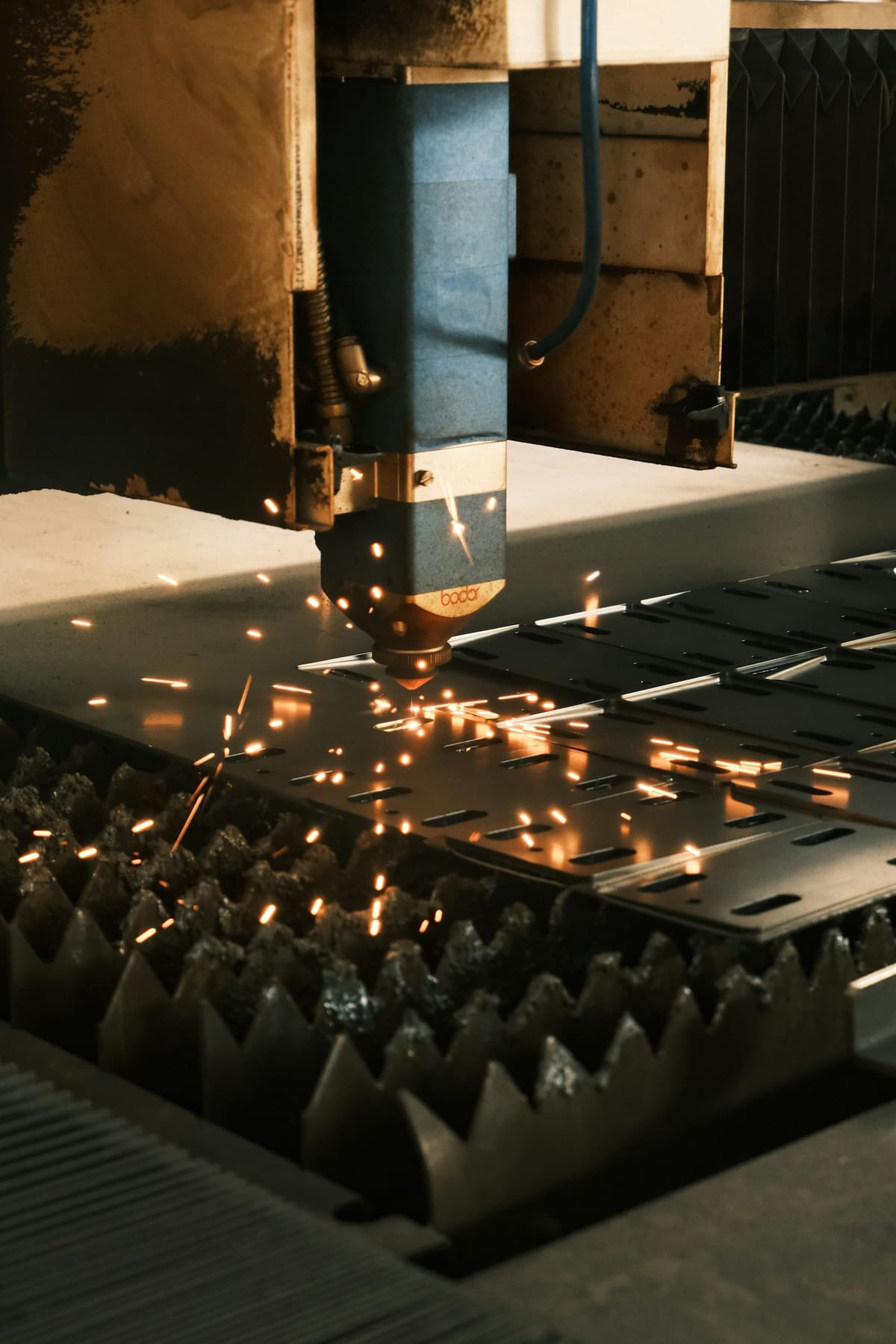
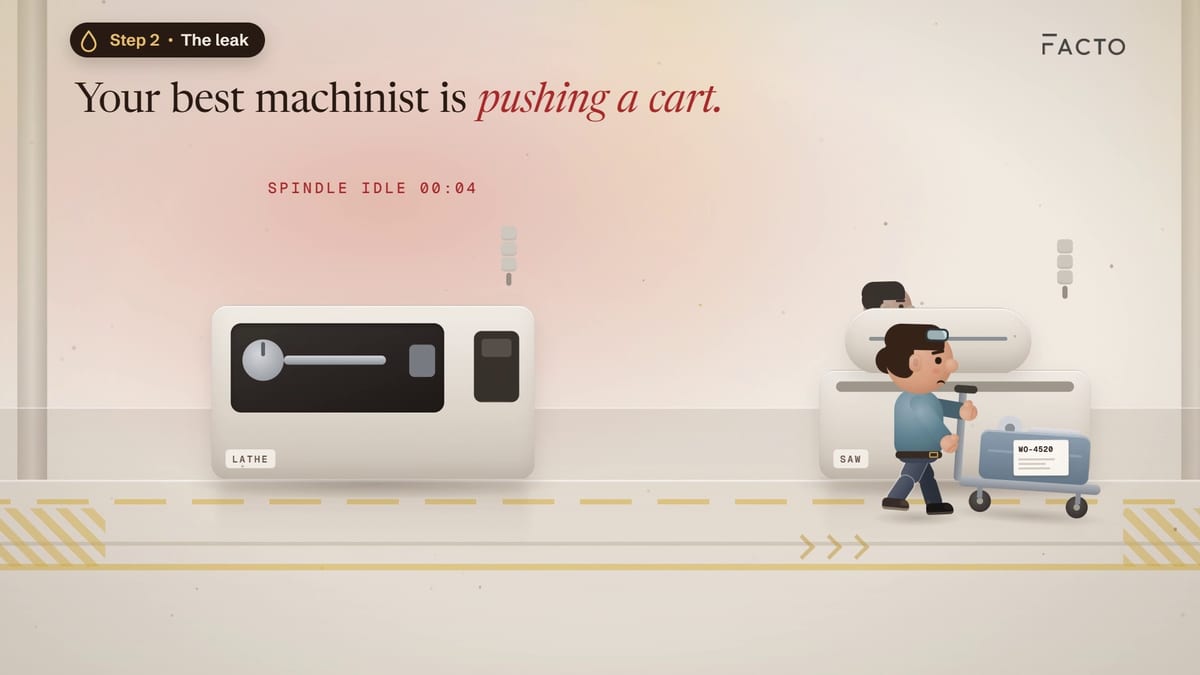
Walk any job shop at ten in the morning. A finished part sits on a cart next to a quiet CNC mill, waiting for someone to take it to the lathe. Across the aisle, a machinist has stopped her own machine to go looking for her next job. Nobody here is lazy, and nobody's doing anything wrong. The work is just waiting.
Dr. Shahrukh Irani, who spent 16 years teaching industrial engineering at Ohio State and created the Job Shop Lean method, has a simple proposal for fixing it: treat every move between machines like a ride request.
What does it mean to Uberize the moves between machines?
Where a job shop's margin goes after the quote
Job shops work hard to win orders on tight quotes. Then much of the margin leaks away on the floor, in small delays that nobody records. A job finishes and waits for pickup. An operator walks off to find material. A planner spends the afternoon expediting by phone.
Dr. Irani's point is that most of an order's flow time in a job shop adds no value. For most of that time the part sits between operations, waiting, with nobody cutting, drilling or inspecting it. Because those minutes are never time-stamped, they never show up in a report, and so they never get fixed.
The trouble with building a cell
Manufacturing cells are the textbook answer. Put the machines for a family of parts next to each other and the waiting disappears. But moving machines costs money, takes downtime, and disrupts a floor that's already busy. For most job shops, rearranging the layout isn't an attractive option.
So the question becomes: can a family of parts flow like a cell while the machines stay exactly where they are?
Request, claim, move, escalate
The idea borrows from the way a ride app works.
- Request. At the machine, the operator taps one of two requests on a tablet: bring my next scheduled job, or take this finished job to its next operation.
- Claim. The request appears in a shared queue on the phones of the material handlers, or a trained "water spider" whose job is keeping machines fed. One handler claims it, which makes them the owner, so two people never chase the same job.
- Move and confirm. The handler moves the job and confirms pickup and delivery.
- Escalate. If a request isn't claimed, or is claimed but not delivered, within an agreed window, the system raises an alarm. The pilot starts with about 15 minutes and tunes it from there.
- Measure. Every request, claim and move is time-stamped, so the shop finally sees where the time goes.
Priority comes from the shop's own schedule. The planner, or the shop's scheduling system, decides which job matters most, and the queue follows that order.
Moves between machines today vs. with request-and-claim
| Today | With request-and-claim | |
|---|---|---|
| Who knows a job is ready | Whoever walks past | Every handler, the moment the operator taps |
| Who moves it | Whoever is free, often the operator | One named handler who claimed it |
| What happens if it's forgotten | Nothing, until someone asks | An alarm after the agreed window |
| Which job goes first | Whatever is closest | The schedule's priority |
| Record of waiting time | None | Every request, claim and delivery time-stamped |
What is a virtual cell?
When moves happen on request and on time, a family of parts can flow between a saw, a mill and an inspection bench as if they were arranged in a cell, even though they sit in different bays. The machines stay in their work centers and only the flow changes. That's the virtual cell, and it's the payoff of the whole idea.
- Request-to-claim time
- Request-to-delivery time
- Overdue requests by shift
- Queue time between operations
- Machine time lost waiting for work
- Operator time spent searching for material
- Schedule adherence, work in process and flow time
What Facto brings to the pilot
Dispatching only works on clean data: job numbers, routings, completion records, locations and who's available. Facto is shop-floor software already live in factories in India and the Middle East. Operators record work at the machine on a phone or tablet, every step has an owner and a time limit, and anything overdue escalates automatically.
For this pilot, Facto provides the floor side: the request buttons, the claim queue, the alarms and the time-stamped record. The schedule stays with the shop's planner or scheduling system, and Facto doesn't replace it.
"Every machine shop works hard on the quote. Then the margin leaks away on the shop floor."Dr. Shahrukh Irani, Lean and Flexible, LLC
How the pilot runs
- Scope: 4 to 6 machines that form one virtual cell for a family of parts.
- Baseline: one week of measuring moves as they happen today.
- Live: 4 to 6 weeks running request, claim, move and escalate.
- Commercials: a small token fee, with the full rollout terms and success targets agreed before we start.
Run a high-mix shop in the US and want to try this on a few machines? Talk to our team, or message Dr. Irani on LinkedIn.
Frequently asked questions
Do we need to move any machines?
No. The point of a virtual cell is that the layout stays the same.
Do we need to hire water spiders?
Not necessarily. Most shops can start with their existing material handlers, trained to work from the request queue.
Does this replace our ERP or scheduling system?
No. Priority comes from your existing schedule. Facto captures what happens on the floor and feeds clean data back.
What equipment is needed?
A tablet or phone at each pilot machine and a phone for each handler.
Is this already running in a US shop?
Not yet. We're looking for one US high-mix job shop to be the first pilot partner.